The Third Wave Has a Blind Spot
A thoughtful response to Nan Ransohoff’s important piece on AI, wealth and the future of philanthropy

June 19, 202615 min read
By Nathan Chappell
I want to be transparent about something before I say anything else.
I am among the most pro-AI voices in the nonprofit sector. I co-invented patents on gratitude prediction nearly a decade ago, before most fundraising professionals had heard the term machine learning. I have spent years arguing — sometimes against significant resistance — that AI is not a threat to the social sector but its greatest amplifier. Three books, hundreds of keynotes, and a community of 23,000 practitioners later, I have not softened that view. If anything, I have deepened it.
So when I push back on Nan Ransohoff’s recent Substack essay, “The Third Wave of American Philanthropy,” I want to be clear: I am not defending the status quo. I am not skeptical of capital. I am not afraid of disruption. I am someone who has spent a career at the intersection of technology and generosity, and I believe Nan got the capital right and the talent wrong. That distinction matters enormously.
I encourage you to read her piece first. The link is here. She is a serious thinker writing about something real. This is not a rebuttal. It is a set of questions from a unique vantage point, offered in the spirit of making the conversation more complete.
How I Got Here
In 2000, I sold my second technology company. My plan was straightforward: earn a master’s degree, head to Madison Avenue, and apply what I knew about building businesses to the world of marketing and communications.
The nonprofit sector found me first.
I did not go looking for it. I stumbled into it the way most meaningful things happen — unexpectedly, through an open door I almost did not walk through. What I found on the other side changed everything I thought I understood about talent, efficiency, and what it actually means to build something that lasts.
I stayed for seventeen years. I led teams. I helped architect campaigns. I watched organizations built on nothing but mission raise hundreds of millions of dollars for education, medicine, and human services. I went to bed most nights knowing the work mattered in ways I had never experienced in the for-profit world. Not because I was trying to get rich, but because I was trying to get it right.
Then, nearly a decade ago, I pivoted into AI — not away from the sector, but deeper into it. I helped file patents on the relationship between human connection and giving behavior. I founded Fundraising.AI. I wrote the books. And I did all of it because I believe that AI, applied responsibly, can do what the sector has always needed: honor every person as an individual, at scale, without losing the humanity that makes generosity meaningful.
I tell you this not to establish credentials but to establish a vantage point. I have started and sold technology companies. I have spent nearly two decades inside the nonprofit sector helping raise billions for social good. I have been at the frontier of AI in philanthropy for the better part of a decade. I am not defending a world I do not understand. I am challenging assumptions made by people who have not yet lived inside the world they are proposing to transform.
What Nan Gets Right
The capital math is real. The historical framing is grounded. The urgency is legitimate. The assumptions abound.
A concentrated wave of AI-generated wealth is forming. The OpenAI Foundation holds a staggering position. Anthropic founders and employees have made significant pledges. If even a fraction of that capital finds its way to the social sector in the next decade, the implications are significant. Nan is right to name this moment and right to ask whether the sector is prepared to absorb it.
She is also right about one uncomfortable truth: some organizations will need to grow, evolve, and operate with greater rigor than they have historically been resourced to achieve. The nonprofit sector has not been immune to drift, inefficiency, or resistance to innovation. There are real organizations doing real work that would benefit from capital, talent, and better tools.
And I find genuinely exciting the possibility she gestures toward near the end of her piece — a new class of entities amplifying social good in ways we have not yet imagined. I think about this often. The organization that raises a billion dollars for human flourishing with one employee and an AI infrastructure backbone is not a fantasy. It is an inevitability. I want to see it happen. But done in a way that first assesses short-term gain versus long-term and unintended consequences.
So this is not a defense of the status quo. It is a challenge to the assumption embedded in the framing that the status quo is the primary obstacle.
The Talent Assumption Is Wrong
Nan’s third belief is where I have to stop.
She writes that traditional philanthropic organizations and people “won’t cut it” — that Wave 3 demands tech-caliber talent and execution, and that new funders will likely distrust people who come from traditional philanthropy.
I have watched this assumption arrive in the social sector before. I have watched it arrive with confidence, with capital, and with a certainty that private sector discipline would solve what mission-driven organizations had somehow failed to figure out. And I have watched, with some regularity, as those same people discovered something they had not expected.
Operating in the currency of trust is not a soft skill. It is the hardest operational discipline in any sector.
You cannot move fast and break trust. And in the social sector, trust is the product.
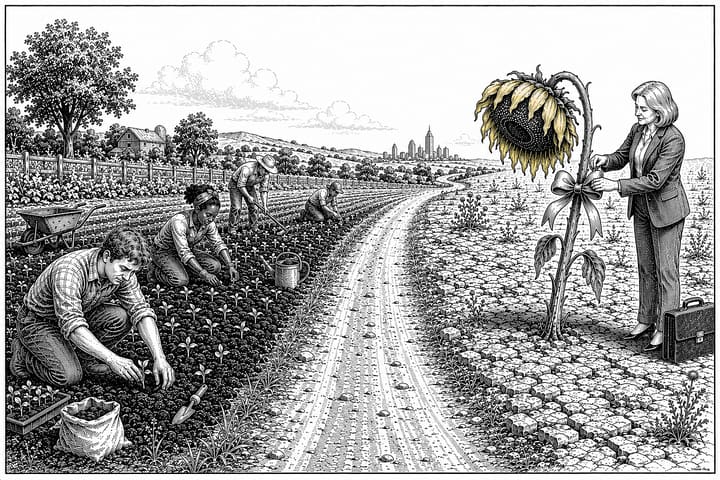
The nonprofit professional who has spent twenty years learning how to hold a donor relationship through a capital campaign, a leadership transition, an economic crisis, and a global pandemic has developed something that cannot be onboarded in a sprint. The executive director who has built a regional organization from a staff of three to a staff of sixty on restricted funding and volunteer labor has demonstrated a form of resourcefulness that most venture-backed founders have never had to summon.
There are 1.7 million nonprofit organizations in the United States and roughly 150,000 in Canada. The vast majority of them operate on less than $500,000 per year. They are not failing. They are under-resourced. There is a difference. Mistaking chronic underfunding for incompetence is not a new error, but it is a costly one.
The labor pool Nan is looking for is not absent. It is already there — invisible to a talent calculus that only recognizes pedigrees it has previously rewarded.
“We Need a Silicon Valley for Public Goods.” Do We?
This is the line that made the hair on the back of my neck stand up.
I started a dot-com in 1997 and miraculously made it through the dot-com bubble. I watched things built on a house of cards, accelerated by capital that moved faster than wisdom, collapse in ways that cost real people their livelihoods. I am living through the AI hype cycle right now, watching leaders of extremely prominent organizations completely reverse stated positions within 48 hours based on regulatory winds, competitive pressure, or what side of the bed they woke up on.
Silicon Valley is not a model for building trust infrastructure. It is a model for building scale.
Those are not the same thing.
Silicon Valley optimizes for exit. The food bank has no exit. The hospice does not pivot. The domestic violence shelter does not get acqui-hired. As Matt Leighty wrote in the comments of Nan’s piece — and I thought this was the most important thing anyone said in that entire thread — “there is no exit from the human condition.” The permanence is not a failure of ambition. The permanence is the point.
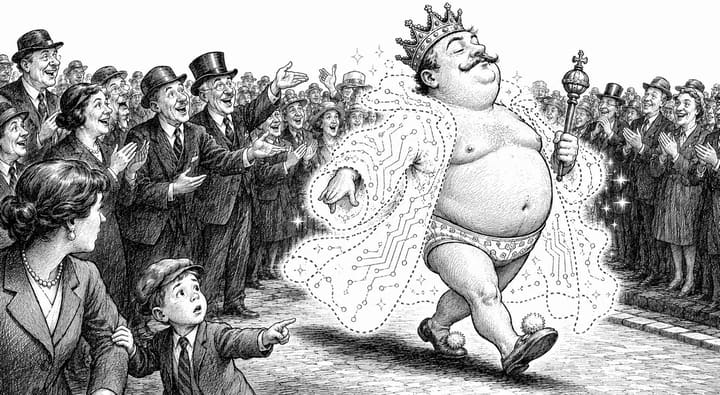
What worries me most about the Silicon Valley metaphor is not the efficiency it implies. It is the values architecture it imports without declaring. Speed. Power laws. Risk tolerance. Disruption as a virtue. These are coherent values inside a system where failure is primarily financial. They are far more complicated inside a system where the people absorbing the failures are already vulnerable.
What Philanthropy Actually Means
Before we build a Silicon Valley for public goods, it might help to agree on what we mean by philanthropy.
The word comes from the Greek: philos, meaning love, and anthropos, meaning humanity. Philanthropy is, at its root, the love of humanity.
In 2022, Elon Musk sat down with TED head Chris Anderson at the Tesla Gigafactory in Texas. When the conversation turned to billionaire philanthropy, Musk offered a definition that has stayed with me ever since — not because it is wrong exactly, but because of what it reveals. “If you care about the reality of goodness instead of the perception of it,” Musk told Anderson, “philanthropy is extremely difficult. SpaceX, Tesla, Neuralink and The Boring Company are philanthropy. If you say philanthropy is love of humanity, they are philanthropy.”
When I heard this, I posted a question online that I think cuts to the heart of what is happening in this third-wave conversation: if Tesla is philanthropy, does buying a Tesla make me a philanthropist?
I am not asking this to mock the argument. I am asking it because the answer reveals a fundamental divergence in how the tech world and the social sector understand what philanthropy is and therefore what it requires.
Building a better electric car is a remarkable thing. Accelerating sustainable energy is genuinely important. But philanthropy — the actual practice of it, the kind that builds civic life, restores human dignity, and holds community together in the places markets abandon — is not a byproduct of a profitable enterprise. It is a deliberate, relational, often unglamorous commitment to people who cannot pay for what they need.
When we conflate the two, we do not elevate commerce. We diminish the practice. And we risk building an entire third wave of giving on a definitional foundation that privileges the giver’s self-image over the recipient’s actual need.
Philanthropy is not what happens when a good company exists. It is what happens when someone chooses to give without expectation of return.
The nonprofit sector has always understood this distinction. It is not a coincidence that the people who have spent careers inside it are also the people most likely to interrogate whether a new model actually serves the people it claims to.
Incentives Rule
Charlie Munger spent a lifetime reducing complex human behavior to a single question: “Show me the incentives and I’ll show you the outcome.”
I think about this every time I read about the third wave.
Nan’s Wave 3 funders are, by her own description, people whose wealth was generated by AI companies whose continued success depends on the broad adoption of AI. That is not a conspiracy. That is just incentives. A foundation funded by OpenAI equity has a structural interest in defining “civilizational flourishing” in ways that happen to require more AI. An ecosystem of philanthropic startups built in the image of tech culture has a structural interest in defining talent and efficiency in terms that privilege tech culture.
I am not arguing these interests are malicious. I am arguing that incentives shape outcomes whether or not anyone intends them to.
We have a proof of concept for what happens when we do not interrogate those incentives before scale makes them irreversible.
Nobody at a major social media company in 2004 intended to decrease happiness or increase teen suicide rates. They intended to connect people. The intention was genuine. The outcome was something no one planned because no one paused long enough to ask what the second and third-order effects might be when their technology met human psychology at civilizational scale. We are still living with the consequences.
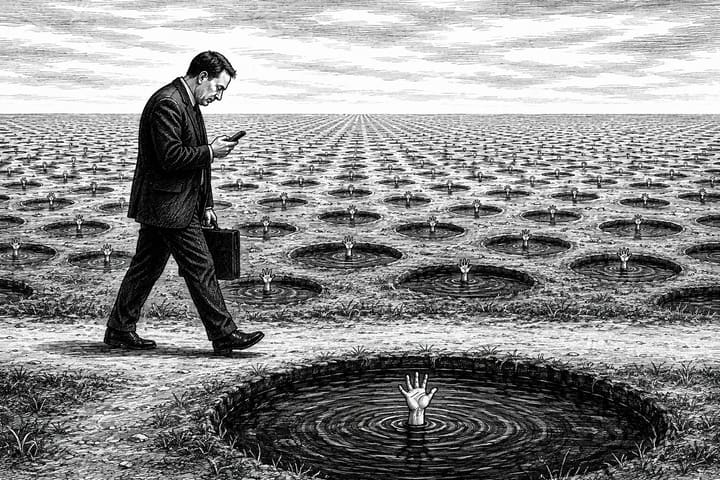
The nonprofit sector operates at the intersection of human vulnerability and public trust. It cannot afford to move fast and fix it later. The people it serves do not have a later.
This is not an argument against AI. I have staked my career on AI’s potential to do extraordinary good in this sector. It is an argument for the kind of slow, deliberate, consequence-aware thinking that the sector’s most experienced practitioners have spent careers developing — and that the Silicon Valley frame tends to treat as a liability.
The Crowding Out Question Nobody Is Asking
Here is the thing about the generosity crisis that Nan’s piece does not address.
Total charitable giving in the United States is at record levels. The number of Americans who give is in freefall.
This is not a capital shortage. It is a participation collapse. Eighty million people who used to give no longer do. The generosity crisis is an engagement crisis, a belonging crisis, a crisis of people no longer seeing themselves as part of something larger than their own household. That is the actual problem. And it is not a problem that $50 billion from a handful of AI founders solves.
In fact, it may make it worse.
A more generous society is not one where fewer people give more. It is one where more people give at all.
When philanthropic capital concentrates — when the message the broader culture receives is that the billionaires will handle it — the civic muscle of everyday generosity continues to atrophy. People opt out not because they do not care but because they no longer feel needed. That signal, repeated at scale through a third wave that is explicitly and proudly built around large capital from small numbers of people, may accelerate the very participation collapse that sits at the root of the crisis.
The Giving Pledge is instructive here — and the evidence is more sobering than most people realize. Launched in 2010 by Bill Gates and Warren Buffett, the pledge asked the world’s wealthiest individuals to commit to giving away at least half their wealth during their lifetimes or at death. The announcement generated enormous fanfare and moral authority.
Fifteen years later, a 2025 report by the Institute for Policy Studies tells a different story. Of the 22 original signatories who have since died, only 8 actually fulfilled their pledge. The 32 living original U.S. pledgers who remain billionaires have collectively grown roughly 166 percent wealthier since signing — their wealth compounding faster than their giving. Only one living couple from the original 2010 cohort has been identified as having actually fulfilled the commitment. Meanwhile, about 80 percent of what has been given has flowed into private foundations and donor-advised funds rather than to working charities — vehicles that can warehouse wealth for years with minimal disbursement requirements. The Institute for Policy Studies summarized it plainly: the Giving Pledge is “unfulfilled, unfulfillable, and not our ticket to a fairer, better future.”
Carnegie said that the man who dies rich dies disgraced. The data suggests that standard has proven difficult for even the most well-intentioned to meet. Promises are not capital. And the assumptions embedded in Nan’s third wave — that pledged AI wealth will translate into deployed philanthropic impact — deserve the same honest scrutiny.
A Note on What Counts as Impact
One more thing I want to name, because I think it is important.
Nan’s framing of the third wave assumes that impact is primarily a deployment problem — that the bottleneck is insufficient organizations and insufficient talent to absorb and direct capital effectively. If we build the infrastructure, the good will follow.
I am not sure that is the right frame. And I think it matters enormously which frame we use.
The greatest philanthropic infrastructure does not replace the relationship between a donor and a cause. It deepens it. The greatest AI in this sector will not replace the trust between an organization and the community it serves. It will honor it with greater precision and care. The difference between capital deployment and genuine social transformation is not a systems design problem. It is a values problem. And values do not scale the same way software does.
I am also convinced that the traditional nonprofit structure is not always the right vehicle, and I say that as someone who spent seventeen years inside it. The rise of benefit corporations (B-corps) and other hybrid models that combine access to capital with genuine mission accountability is worth serious attention. The question is not which legal structure we use. The question is whether the values architecture — the operating in the currency of trust, the long view, the commitment to consequence rather than exit — survives the contact with civilizational-scale capital.
That question does not have an easy answer. But it is the right question. And the sector that has been asking it, imperfectly and under-resourced, for decades deserves to be in the room when the answer is worked out.
What I Hope We Do
Nan ends her piece with a call to action. I want to do the same, though mine sounds a slightly different.
I hope the AI funders who are preparing to move capital into the social sector spend serious time inside it first. Not on site visits. Inside it. Long enough to feel the texture of the trust that has been built, the fragility of the relationships that sustain it, and the intelligence of the people who have given their careers to work the market will never adequately compensate.
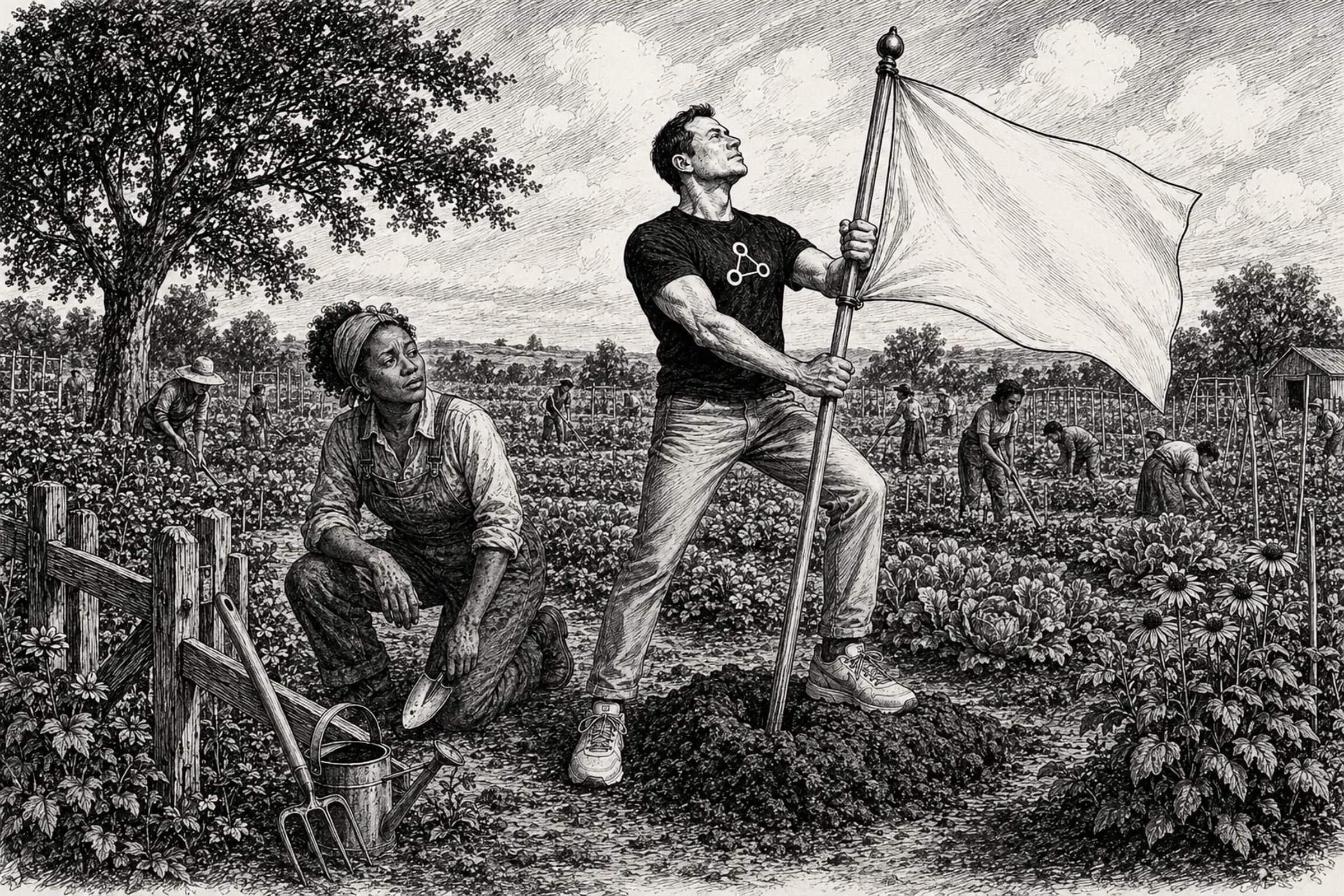
I hope the third wave amplifies what is already there before it tries to replace it.
I hope we are honest about the Giving Pledge lesson — that intent is not outcome, that promises are not capital, and that the infrastructure being built on expected wealth should be built with appropriate humility about whether that wealth actually arrives, in what form and with what values and discernment helps guide it.
I hope we ask, before we move, what the second and third-order effects of this capital concentration will be on the civic culture of everyday giving. Not because the answer is obviously bad. But because we did not ask that question about social media, and we are still paying for it.
And I hope we remember — or perhaps discover for the first time — that a genuinely generous society is not measured by how much capital flows from a few to many. It is measured by how many people wake up in the morning believing that what they do, and what they give, and what they choose to care about, matters.
That is the crisis. That is the thing worth solving.
The third wave has real potential to help. I just want to make sure it sees the problem it is actually solving, and includes the people already working to solve it.
Nathan Chappell, MBA, MNA, CFRE, AIGP is Chief AI Officer at Virtuous Software and co-author of Nonprofit AI, The Generosity Crisis and the forthcoming book, N1 Philanthropy. He writes about responsible innovation, the future of generosity, and the power of radical connection in the age of AI.
Originally published on Nathan’s Substack.