The New Math of Success
Why Being Smart Is No Longer Enough in an AI-First Nonprofit World - and What Matters Instead

January 6, 20266 min read
It usually starts quietly.
A nonprofit professional sits down after a long day, opens a laptop, and stares at a familiar problem. A campaign that feels tired. A donor segment that is underperforming. A process that everyone knows is inefficient but no one has time to rethink. In another era, the response would have been predictable. Schedule a meeting. Commission a report. Hire a consultant. Or simply accept that friction is the unavoidable cost of doing meaningful work with limited resources.
But something has shifted.
Instead of waiting, they open a tool. They ask a question. Then another. They explore an idea that, until recently, would have required weeks of analysis or a specialized skill set they did not possess. Within minutes, possibilities begin to surface. Not answers exactly, but directions. New ways of framing the problem. Paths that had never fully revealed themselves before.
What matters in this moment is not the technology itself. It is the posture of the human using it.
Because the real change is not that intelligence has suddenly appeared. It is that access to intelligence has changed who gets to explore ideas and when. The quiet monopoly once held by tenure, specialization, and formal authority is loosening, replaced by something more fluid and more human. Curiosity now opens doors that credentials once guarded.
For most of the nonprofit sector’s modern history, success followed a logic that felt earned and stable. You accumulated knowledge slowly. You learned systems by living inside them. You paid your dues and built credibility through repetition and responsibility. Over time, experience became authority, and authority became trust. Intelligence mattered because it was scarce. Context mattered because it took years to acquire.
That logic has not vanished. But it is no longer enough.
We are entering a period where applied intelligence - the ability to analyze information, generate ideas, recognize patterns, and propose solutions - is becoming broadly accessible. Tools can now assist with thinking itself, dramatically lowering the cost of exploration and experimentation. Intelligence, once hierarchical and guarded, is becoming ambient.
For nonprofit professionals, this shift is not a diminishment. It is an expansion.
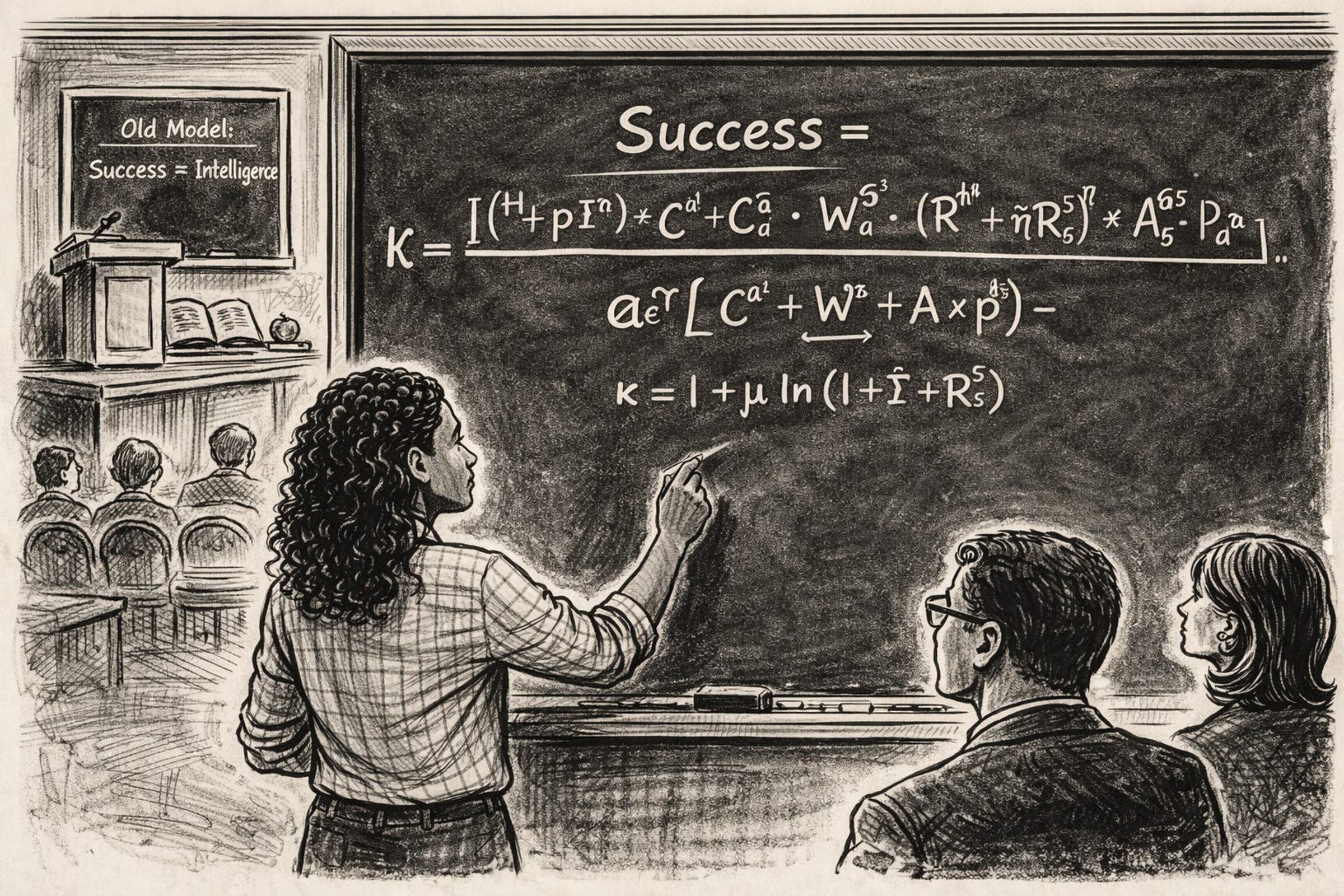
When intelligence becomes abundant, success is no longer defined primarily by what you know. It is shaped by how you think, how you connect ideas, how you decide what matters, and how you act in the world. The old math of success, which rewarded depth within narrow lanes, gives way to a new equation that is more nonlinear, more relational, and more human.
If you were to sketch that equation, it might look something like this: success emerges when augmented intelligence is multiplied by curiosity, wisdom, creativity, adaptability, and passion, all operating within the unavoidable friction of real life.
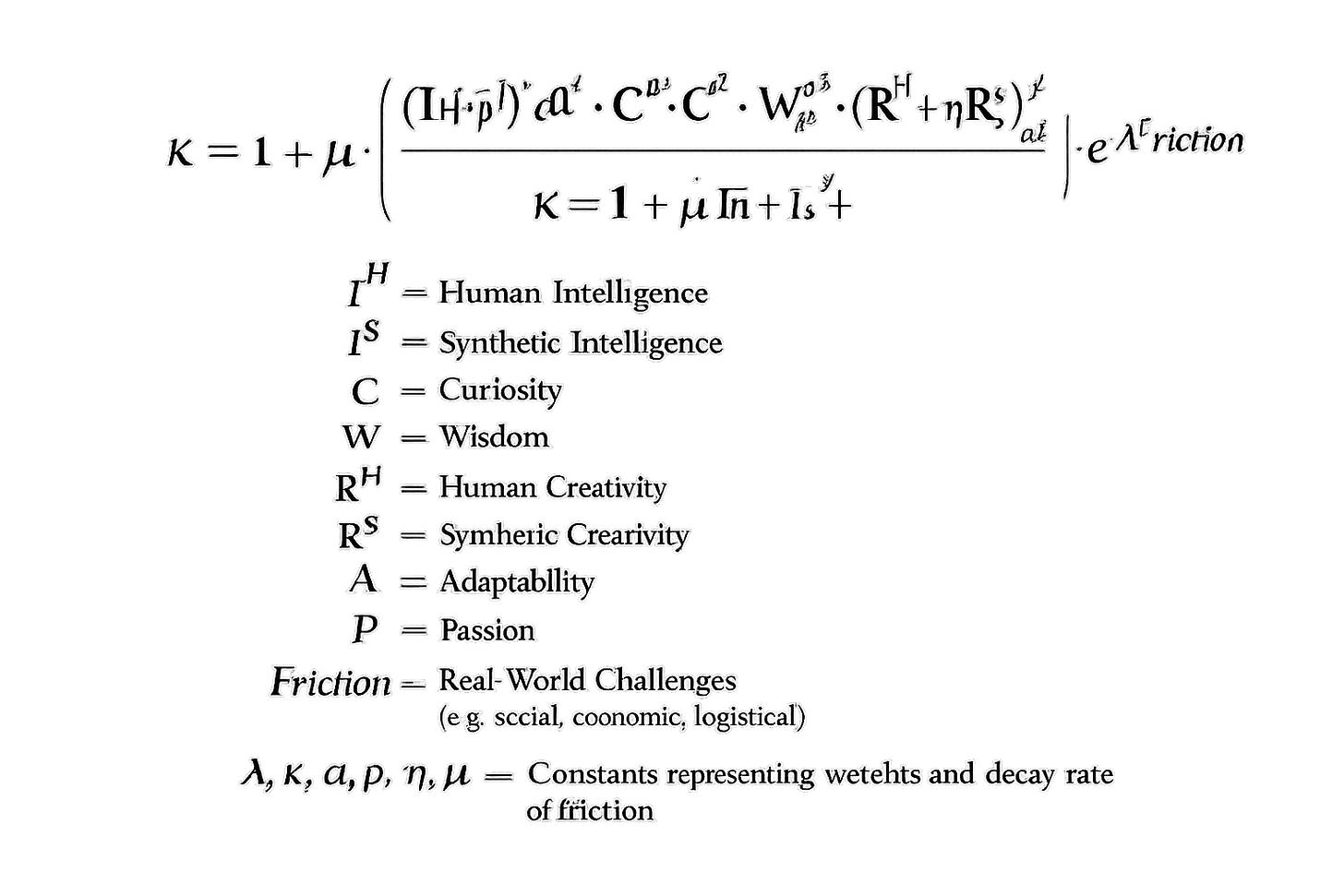
This is not a formula to be solved. It is a way of seeing what it will take to achieve success in an AI-first world.
At the center of this new math sits augmented intelligence. Human intelligence still matters deeply, but it increasingly operates alongside synthetic intelligence. The professionals who thrive are not those who compete with machines at cognition, but those who learn how to collaborate with them. Knowing what to ask, how to evaluate responses, when to trust outputs, and when to override them becomes a core capability.
This shift quietly democratizes possibility. Exploration that once required specialized teams or outside expertise is now available to individuals willing to engage thoughtfully. Intelligence becomes the baseline, not the advantage. The advantage lies in direction, discernment, and intent.
That is where curiosity becomes decisive.
Curiosity is no longer a soft trait or a personality flourish. It is a professional strategy. When answers are cheap, questions become valuable.
Curiosity pulls people beyond job descriptions and departmental boundaries. It draws them into conversations with those who see the world differently. It invites experimentation before permission is granted.
History offers a useful reminder here. The Renaissance did not emerge from isolated mastery, but from collision. In Medici-era Florence, artists studied anatomy alongside physicians. Engineers learned from sculptors. Financiers debated philosophers. The Medici family did not fund genius in silos. They created the conditions for disciplines to collide, and breakthroughs followed connection.
Modern nonprofit work operates under the same logic. When professionals intentionally seek perspectives outside their usual orbit, they expand their capacity to see patterns others miss. Curiosity transforms isolation into insight. It reveals opportunity where routine once obscured it.
But collision alone is not enough.
As intelligence and curiosity accelerate, wisdom becomes the stabilizing force. Wisdom is not about knowing more. It is about choosing well amid abundance. It is the ability to evaluate ideas in context, to anticipate consequences, and to align decisions with values rather than novelty.
In a world where AI can generate endless possibilities, wisdom determines which paths are worth pursuing.
This matters profoundly in nonprofit work. Missions are built on trust. Communities are shaped by decisions that echo long after implementation. Wisdom ensures that efficiency does not eclipse empathy and that innovation remains anchored to purpose. It allows leaders to ask not only what is possible, but what is appropriate.
Creativity, long a defining strength of the sector, takes on new dimensions in this environment. When human imagination is paired with generative systems, the space of possible solutions expands dramatically. Ideas can be prototyped, tested, and refined at a pace that was previously impractical. Creativity becomes iterative and accessible rather than precious, exploratory rather than constrained.
This does not diminish human creativity. It amplifies it. It creates space for experimentation, for learning in public, for trying ideas that once felt too risky or too resource-intensive. Augmented creativity opens doors that were previously closed not by lack of vision, but by lack of capacity.
Adaptability is what allows all of this to compound.
Change is no longer episodic. It is continuous. Tools evolve. Expectations shift. Best practices expire. The professionals who succeed are not those who predict the future accurately, but those who recalibrate thoughtfully as the present changes. Adaptability shows up less in strategy documents and more in habits: creating space to learn, experimenting regularly, solving small problems that unlock disproportionate value, and sharing unorthodox approaches openly.
Over time, adaptability builds resilience. It turns uncertainty into momentum.
Underlying every variable in this new math is passion. Not performative enthusiasm, but sustained commitment to purpose. Passion is what keeps professionals grounded when tools accelerate expectations. It is what ensures that technology serves mission rather than overshadowing it.
As AI absorbs more of the mechanical work, what remains is intention. Why this cause? Why this community? Why now? Passion gives meaning to progress. It keeps innovation unmistakably human.
The most hopeful truth of this moment is that nonprofit professionals are exceptionally well-positioned for what comes next. They are fueled by unbridled passion for making a difference. They are accustomed working creatively within constraints. They understand that success is relational, not transactional. They know that trust is fragile and earned slowly. The new math of success does not ask them to abandon these instincts. It rewards them for leaning into them.
The future will not belong to those who are merely intelligent. It will belong to those who are curious enough to explore, wise enough to choose, creative enough to imagine, adaptable enough to evolve, and passionate enough to care.
The equation has changed. The opportunity has expanded. The future belongs to those willing to lean into possibility, not with certainty, but with curiosity and care.
About the Author
Nathan Chappell, MBA, MNA, CFRE, AIGP is Chief AI Officer at Virtuous Software and co-author of Nonprofit AI and The Generosity Crisis. He writes about responsible innovation, the future of generosity, and the power of radical connection in the age of AI.
Originally published on Nathan’s Substack.